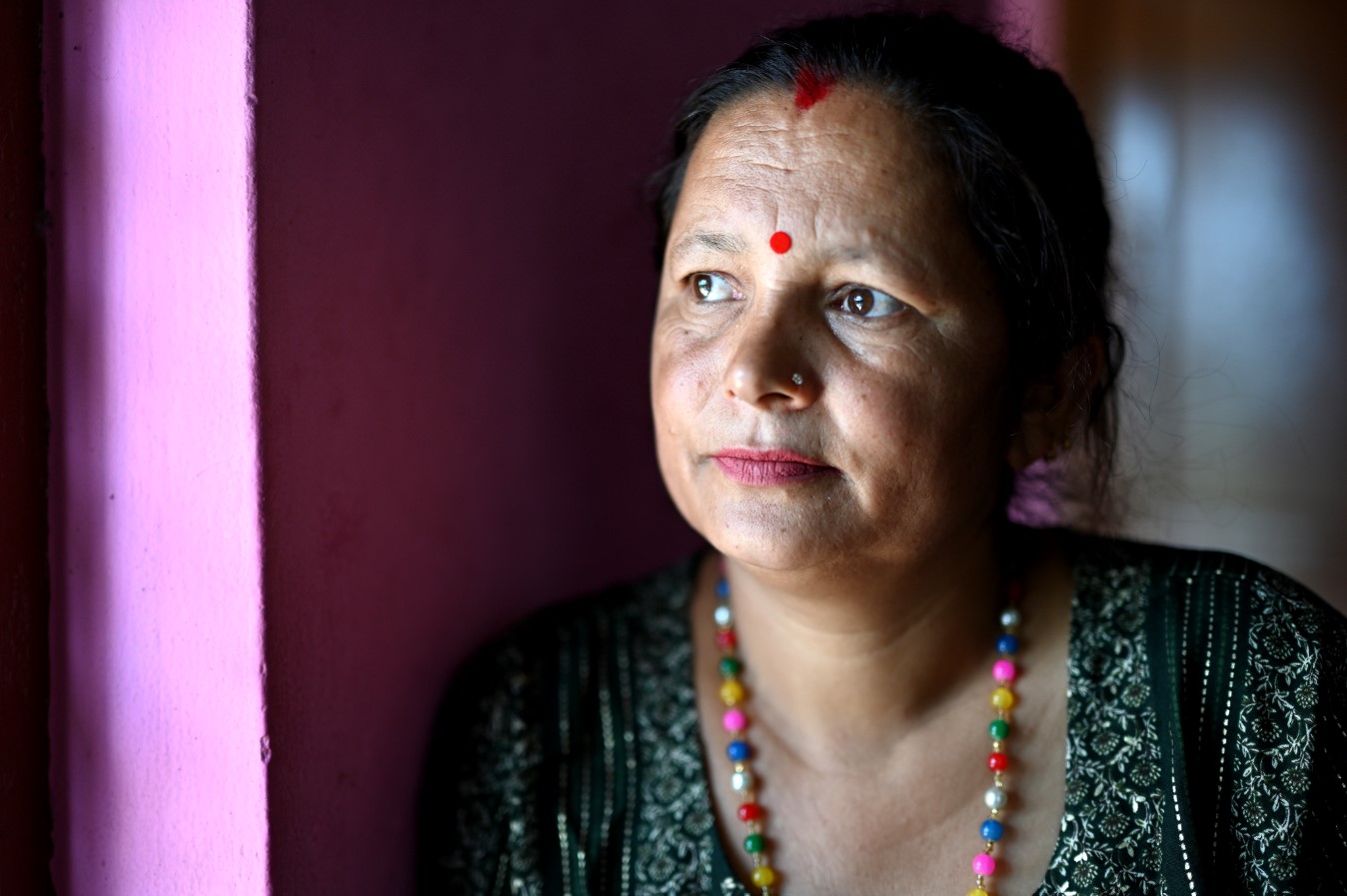
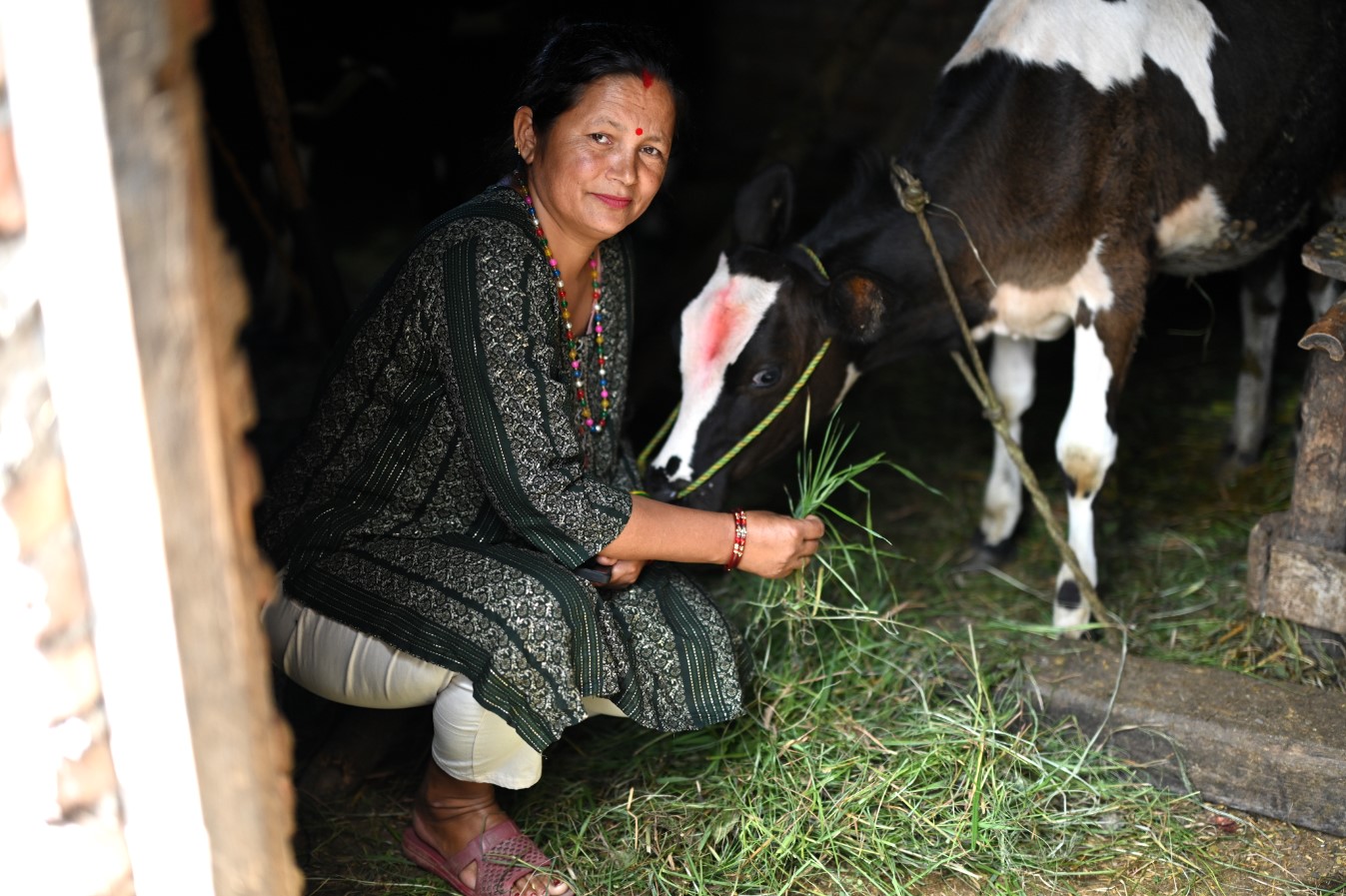


Ambika Khatri
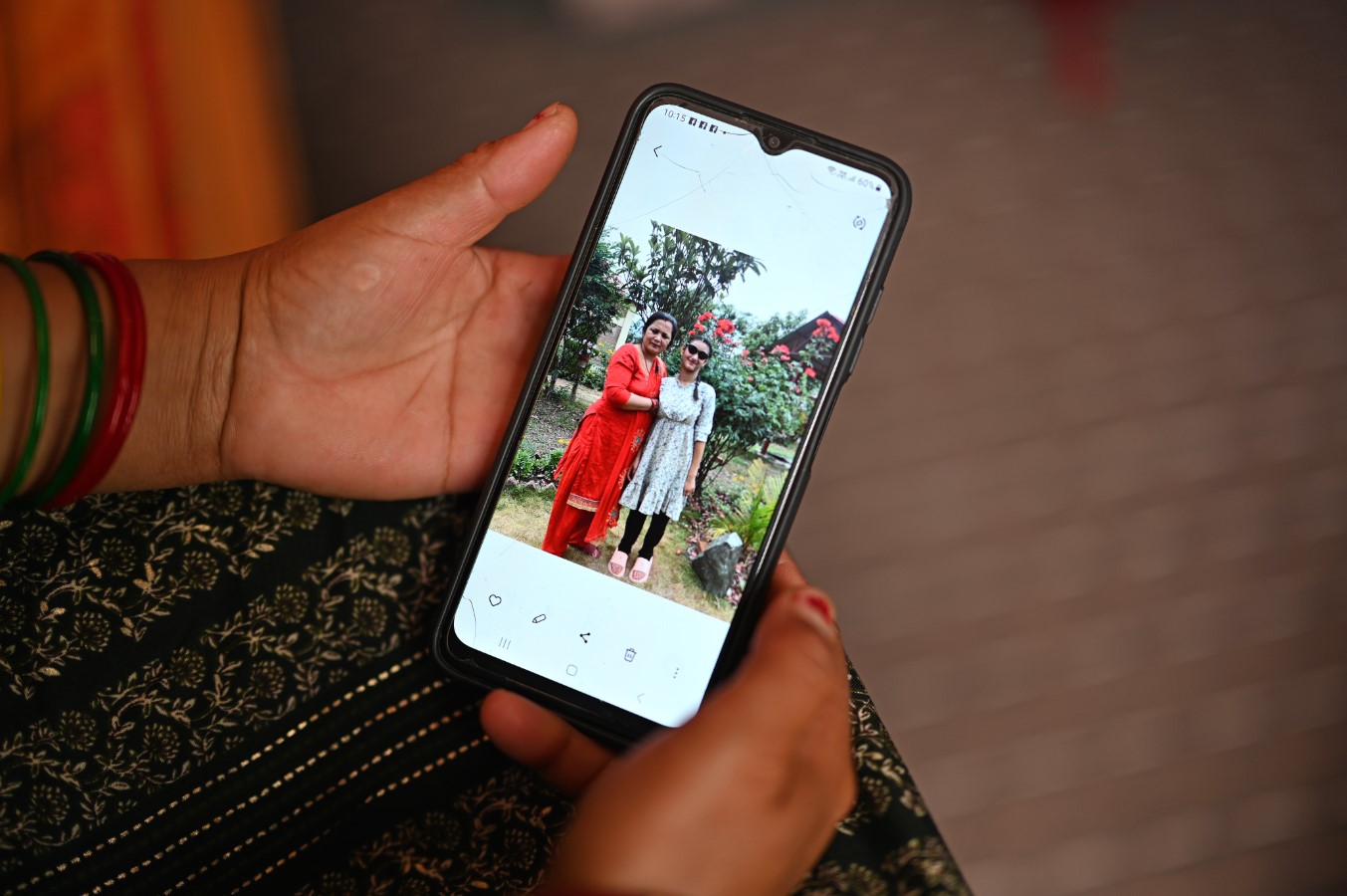
“My name is Ambika Khatri, and I live in Ward No. 8 of Changunarayan Municipality. My daughter has dyskinetic cerebral palsy. It's been just a year since she’s started walking, unsteady and slow, like someone who's lost their balance after a long journey. It’s a sight that might seem clumsy to others, but to me, it’s nothing short of a miracle. For years, she couldn’t take a single step without support. Now, she walks uphill on her own. The months of physiotherapy have been gruelling, but they’ve also brought us this gift. I’ve been treating her for 15 months, and with every small step forward, I hold onto hope.
I didn’t always feel this way. Initially, I was lost, running from one doctor to another, filled with questions no one could answer. My daughter, born in 2066 BS (2010), was perfect. At 2.8 kilograms, she came into the world healthy and thrived for six months. She sat up, played with her dolls, smiled, and responded when we called her name. Then, suddenly, everything changed.
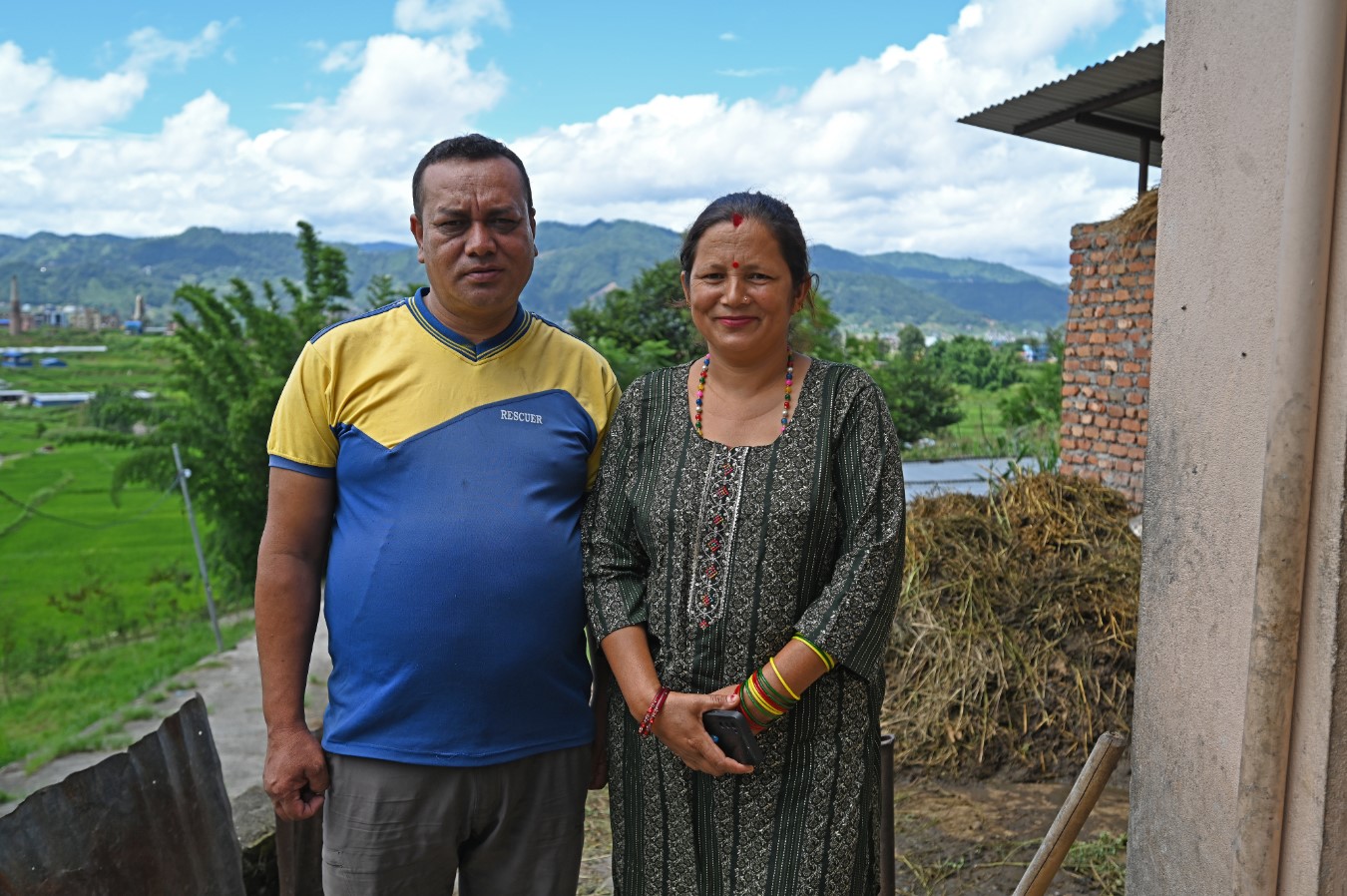
I remember the date as if it were yesterday - Bhadra 17 (September 2). The day before, she had her first taste of solid food; by the next morning, she was burning with fever. We gave her medicine from a local shop, which seemed to help. But on the 21st, as we prepared to say goodbye to her father, who was leaving for a peacekeeping mission in Lebanon, the fever returned with a vengeance - 104°F. We rushed to Kanti Hospital, where she was admitted, but despite their care, she lost her voice. She
would cry, but no sound came out, just tears streaming down her cheeks. The silence was heartbreaking.
I didn’t tell her father. How could I? He was about to leave for months, and I didn’t want to burden him with the worry. Nor did I tell my in-laws, who were old and frail themselves. It was a lonely time, just me and her, going back and forth to the hospital. The doctors told me it was nothing serious, and for days, they did little but reassure me. I felt invisible, unheard. One day, I mustered the courage to ask, “If treatment isn’t possible here, tell me. I’ll take her somewhere else. She’s suffering, and you say she’s fine. But I know something is wrong.” They finally gave her a cough syrup, and slowly, her voice returned, and her fever broke.
But by then, something had shifted. She wasn’t the same. Her weight plummeted from 8 kg to 6 kg in just 15 days, and she could no longer stand. Her father came back six months later to find our daughter lying helpless, unable to do the things she once could. He was furious, blaming me for not doing enough. We didn’t even know about cerebral palsy back then, and the weight of the unknown hung heavy in our home.
It wasn’t until she was 15 months old that we learned the name of what was happening to her. We went from doctor to doctor, until we finally arrived at Self-help Group for Cerebral Palsy (SGCP). The specialists there told us that physiotherapy was the only way forward. No matter where we went in the world, they said, therapy was our only hope. So, we began the long road of treatments, a road filled with small victories and many setbacks.
But then, something amazing happened. Slowly, ever so, she began to walk. First with help, then on her own. I remember the first time she stood by herself, gripping a pillar for support. I wept that day. For years, doctors had told me she would never walk, never talk, never live a life close to normal. But they were wrong. She can walk now, and she talks to me every day. Her intellectual capacity is limited, and she struggles with schoolwork, but she knows how to care for herself in many ways. She can feed herself, albeit with shaky hands, and even go to the toilet by herself.
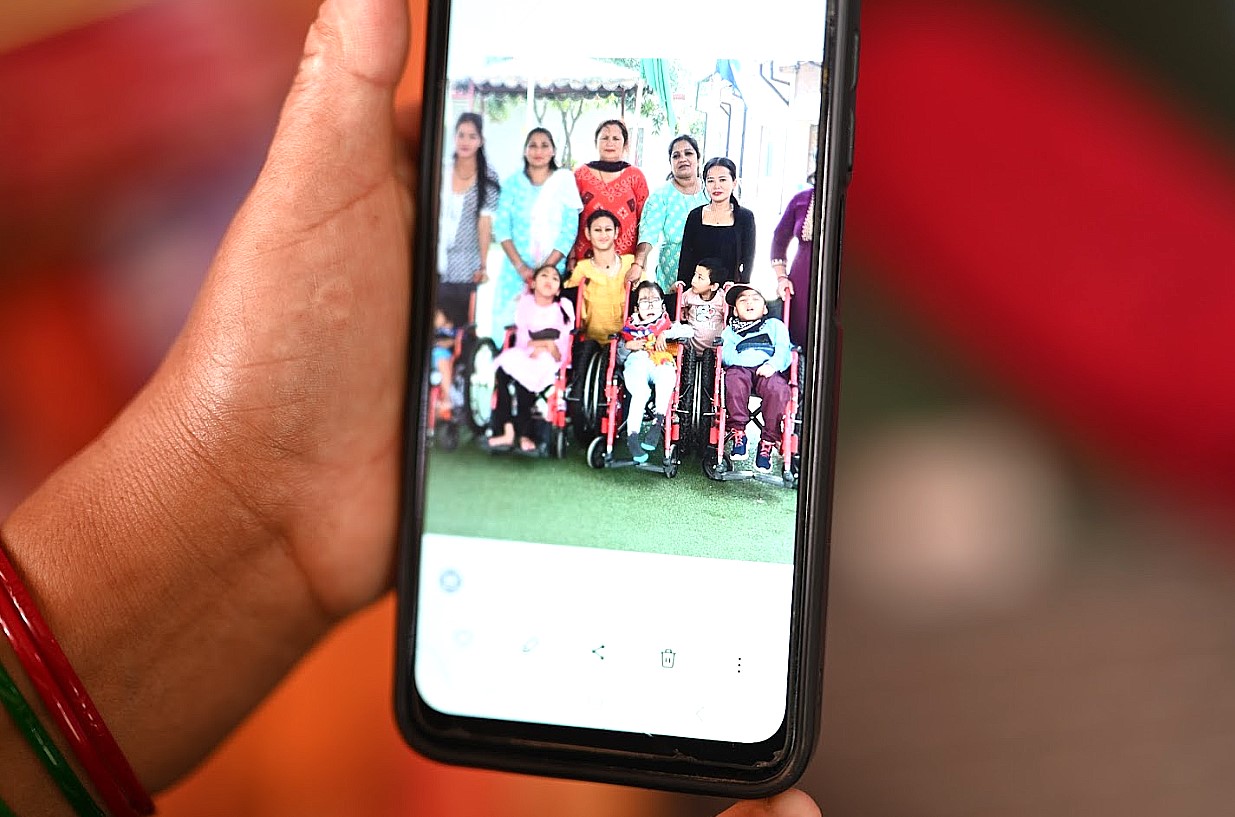
Yet, there are still so many fears. She’s 14 now, and I worry about what will happen when I’m no longer around. Who will help her? Who will care for her? I think about this every day. Today, we lead the Carers Group that was set up by SGCP. This has become a community of parents of children with cerebral palsy, where we share our struggles and help each other. It’s the only way we’ve been able to survive all these years, knowing that someone else understands.
The hardest part is the judgment from others. When people stare, when they whisper, it cuts deep. They don’t see the fight we’ve fought, the nights I’ve spent awake, worrying, or the money we’ve spent on treatments, healers, hospitals, and even falling into debt. My husband sent Rs.600,000 (roughly £3,300) from his mission, and still, it was never enough. Even after all of this, people dare to judge.
But then I look at my daughter. I look at the way she clings to her brother, the way she lights up when she sees him, and my heart softens. For all the struggles, for all the pain, we have come so far. She may never be able to cook or wash her clothes, but she walks, she laughs, she loves. She is mine, and she is a miracle.”


