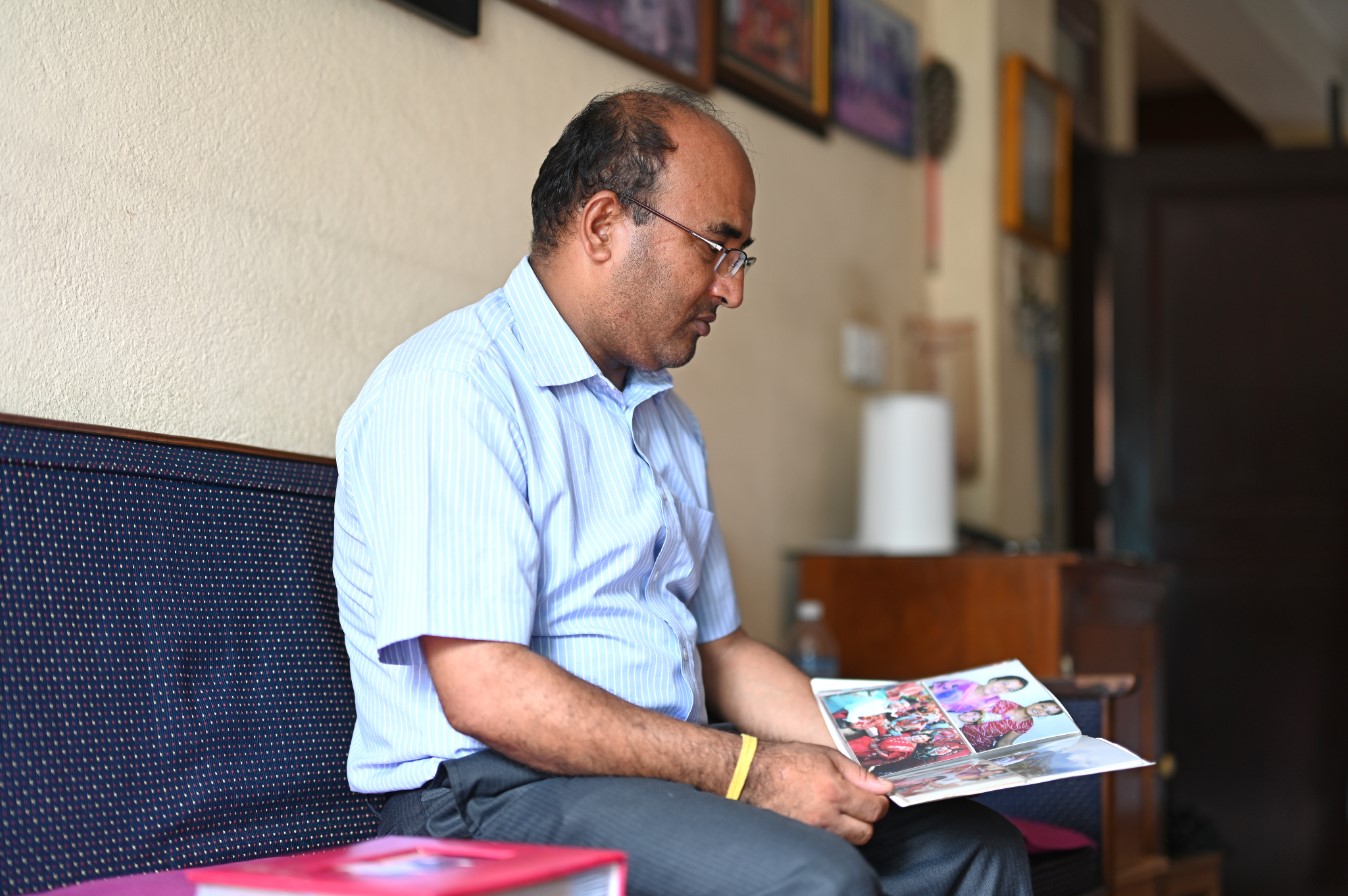

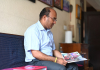
Rajendra Maharjan
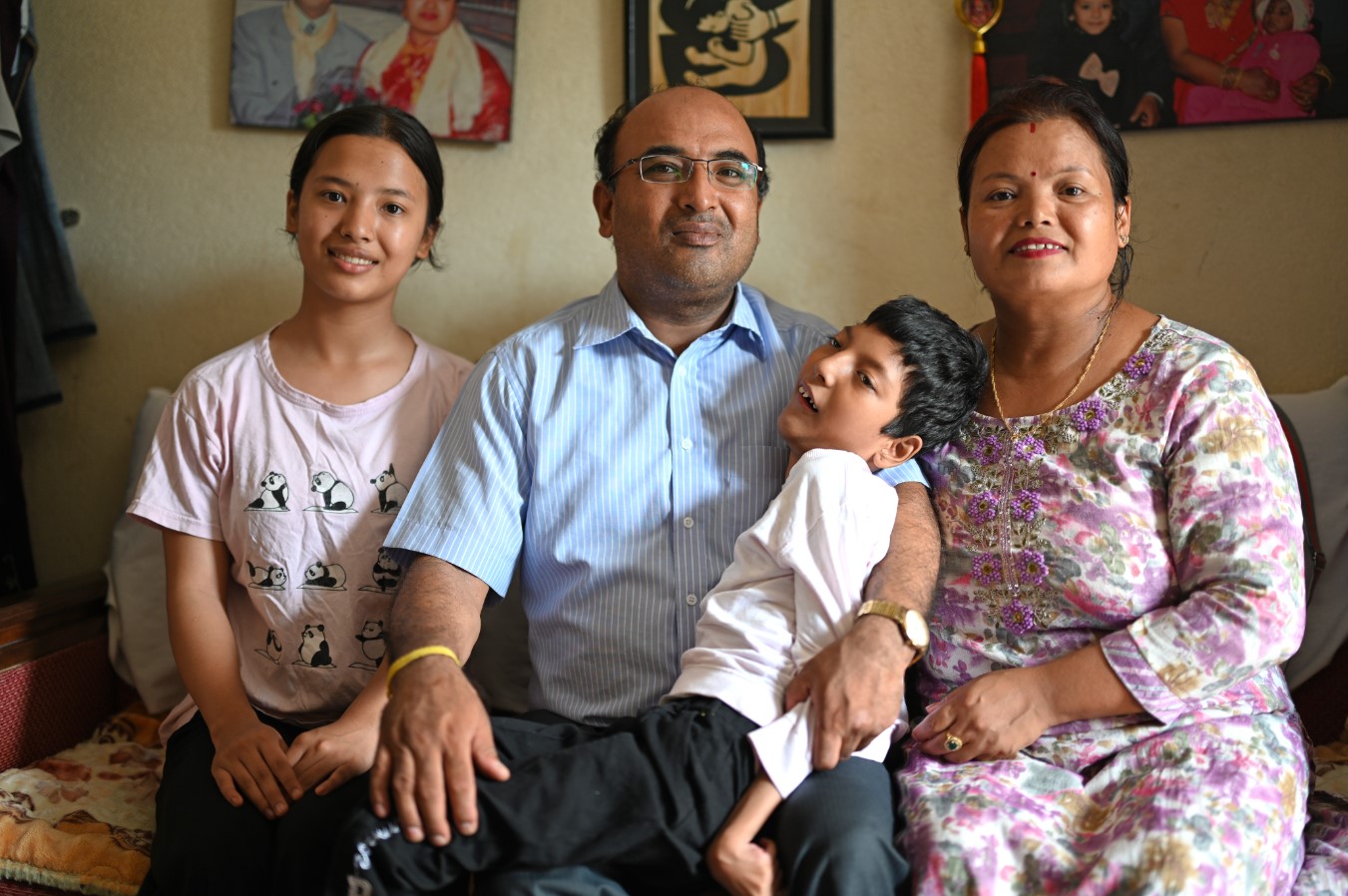
“Farming has always been my life, as it was for my father and his father before him. Even now, as the world pulls me in other directions, I return to the fields. My father couldn’t read much, and never went to school, but he made sure I did. I went as far as I could, balancing between tradition and the future. When I got married in 2062 BS (2006), it was an arranged match - common, nothing out of the ordinary. My wife came from a farming family too, though she had dreams beyond the fields. But like many women of her time, those dreams gave way to the weight of responsibilities at home.
Our first daughter was born two years after we were married. A day I’ll never forget. I remember standing outside the maternity home, clutching a bowl of soup I had made for my wife, waiting for news. When I finally saw her face, everything in my world shifted. I had no idea then how much more our world would change in just a few years.
Our second daughter came four years later. I can still feel the anxiety that settled into my chest that morning in October. Everything had been normal, the doctors reassured me. But when she was born, she didn’t cry. I waited. 15 minutes passed before they told me - something was wrong. She wasn’t breathing. I watched as they worked on her, pumps pushing life into her lungs.
They rushed her to another hospital, one with a ventilator. I followed in the ambulance, my wife left behind. For a month, I lived between two worlds - my wife recovering in one hospital, my newborn clinging to life in another. Every night, I lay in the waiting room, staring at the ceiling, wondering what I had done wrong. Wondering why everything had to be this way.
The night the doctor told me she might never be ‘normal’, I felt my whole world collapse. "Maybe she’ll walk with support," they said. "But maybe she won’t." I barely slept that night, haunted by those words. But even through the fog of fear, I knew one thing - I was going to do everything in my power to give her a life, no matter what the doctors said.
We brought her home a month later, and the weight of that day has stayed with me ever since. She was fragile and small, and the future felt terrifying. But we cared for her - fed her, massaged her, took her to every hospital and therapy session we could find. Slowly, piece by piece, we built a life around her.
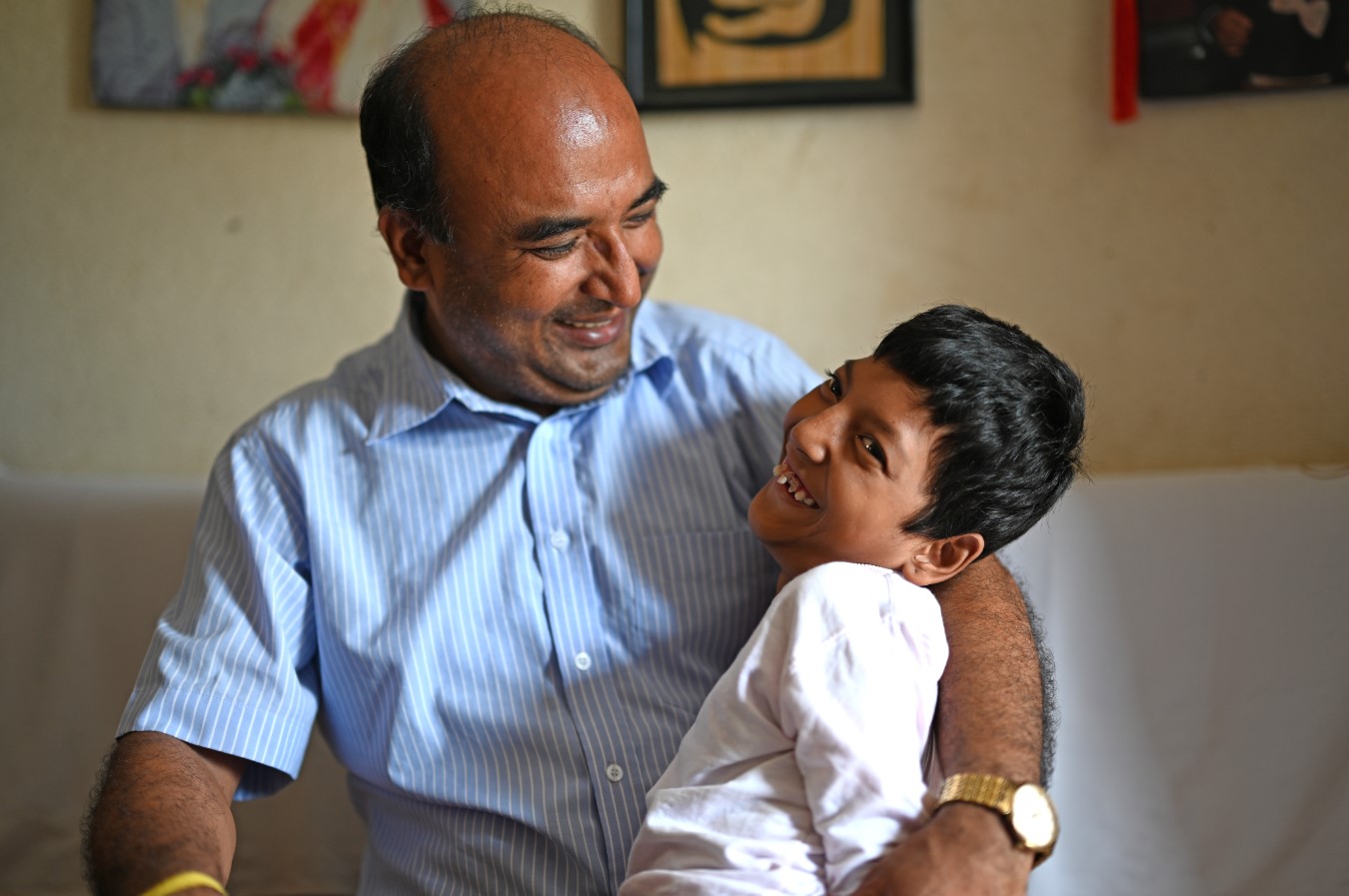
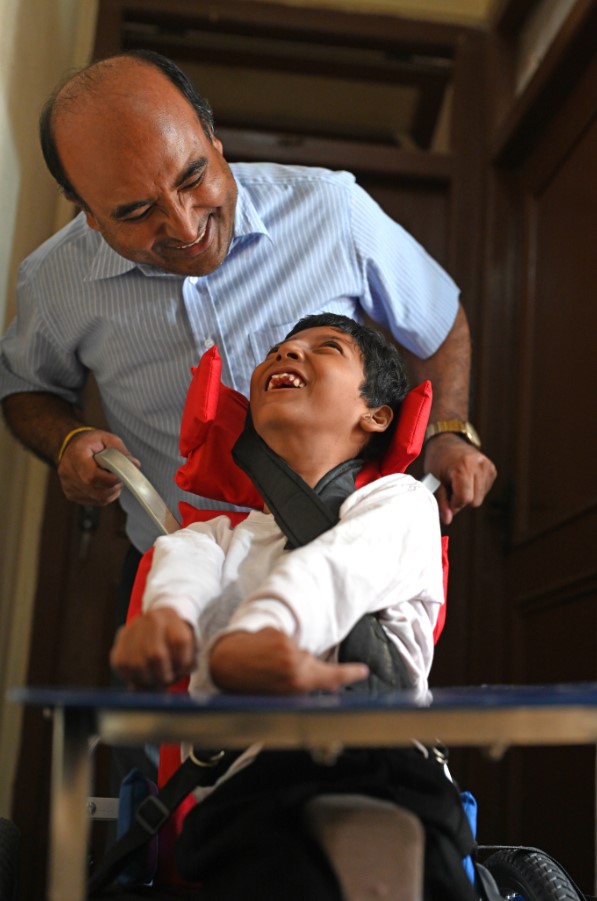
As the years passed, it became clear that our daughter was different. She couldn’t walk. We carried her or used a wheelchair, and she would smile in a way that made everything feel a little lighter, even on the trying days. But I could feel the weight of society’s judgment pressing on us. They whispered about karma or punishment for sins. They don’t understand - no one really does, not unless they’ve lived this life.
And then there’s the government. They hand out crumbs, some social benefits that don’t cover half of what we need. I work, but it’s never enough. My wife has given up everything to care for our daughter, and though we love her with all our hearts, the exhaustion seeps into our psyche. Although we are fortunate to have the support of the Self-help Group for Cerebral Palsy (SGCP), not everyone is. For families far and wide in the country, we dream of a future where there are places - care centres, schools - where children like her are accepted, where parents like us can breathe for a moment, knowing our children are cared for.
We've been connected with SGCP since my daughter was one and a half years old. They taught physiotherapy there, and we follow the same routine at home. During this time, through SGCP, a project called ‘Care for Carers’ was introduced, and through development workers, groups were formed for parents in Kathmandu, Bhaktapur, Lalitpur, and Kirtipur. There are several groups in different areas. Our group is called the Ikhapokhari Guardians Group. Initially, we had 16 or 17 members, but now we have seven.
The purpose of ‘Care for Carers’ is to support parents like us. We hold meetings on the last Saturday of every month, where we share our problems, reassure one another by realising we're all going through the same challenges, and discuss any new tasks that need to be done. Even now, if my daughter faces any serious issues, we still go to SGCP.
Some days, the worry consumes me. What will happen when we’re gone? Who will care for her when we can’t? It’s a question I can’t answer, one that haunts my every thought.
But for now, we keep going. She’s twelve now, and though she can’t speak, her eyes say everything. She knows us. She smiles when she’s happy, and her laughter is the most beautiful sound I’ve ever heard. She makes small sounds, trying to tell us that she’s here, that she’s a part of this world. We understand her. We always will.
My wife and I sit with her, showing her her favourite shows, her face lighting up with joy when Newari songs play on the TV. And in those moments, the weight lifts just a little. Because despite everything, despite the struggles, the pain, the sleepless nights - there is love. There is always love. And that is what keeps us moving forward.”


